Friday, August 11, 2017

Don’t Forget Eastsound

The charming Village of Eastsound, overlooking East Sound
Settled weather is a prerequisite for an overnight anchorage when visiting the village of Eastsound.  Wind from the southeast has a long fetch before reaching the head of the body of water named East Sound, bringing with it some uncomfortable rollers.  But the village at the head of this Sound shouldn’t be missed, it’s one of those special places unique to the San Juan Islands. 
40-foot Day-use Dock at Eastsound
Anchorage is doable in settled weather just south of the day-use dock in 40-50 feet of water, keep seaward of the dock to avoid any eel grass.  Anchorage can also be found along the western shore in Fishing Bay and Judd Bay in 40-45 feet of water over a mud bottom, Judd Bay offers the best protection from south winds but does have a few hazards.  North winds are less likely to pose any problems while anchored in the area.
There are numerous interesting shops in Eastsound
We decided on Fishing Bay and had a comfortable night’s stay.  Taking our dinghy to the public day-use dock on the eastern shore, we made the short walk into the village and enjoyed this charming community. 
It's hard to choose from the many excellent cafes in Eastsound
The village is filled with wonderful boutiques and excellent cafes; sidewalks and pathways lined with flowering shrubs and trees create a private garden appeal.  The town bakery and the ice cream shop are favorites as is the Saturday Farmers Market held in the Village Green, May through September. 
Orcas Island Historical Museum at Eastsound
A collection of log cabins from the late 1800’s makes up the Orcas Island Historical Museum.  Located in the center of town, the museum includes the history of early pioneers who first came to the area.  One of the first European settlers to Eastsound was Charles Shattuck, who built a log cabin and operated a store in the late 1850’s. 
Eastsound is a delightful garden town experience
Many of the early pioneers were employees of the Hudson's Bay Company sent from Fort Victoria to hunt deer.  Other pioneers were prospectors and trappers. 
The Historic Emmanuel Episcopal Church
Some of the town's early buildings still remain in Eastsound, including the Emmanuel Episcopal Church built in 1885 which overlooks the Sound.  While the right sea conditions are often required for a visit to Eastsound, this special community shouldn’t be forgotten when planning a trip through the San Juan Islands.

Thursday, August 10, 2017

At Sea Again


Scenic Lopez Sound
After working at the Waggoner Office in Anacortes, it’s back to work again on the boat and out to sea.  Departing in the late afternoon, we made the short one-hour cruise to Lopez Sound.  Although nearby, it seems a world away.  The large body of water between Decatur Island and Lopez Island, known as Lopez Sound, has a variety of scenery that captures the soul, everything from wind-swept slopes and rocky beaches, to tree-covered hillsides and open pastures. 
Boats at anchor in Hunter Bay
This broad area has easy anchoring depths and several coves with differing orientations for protection from most winds.  Hunter Bay and Mud Bay at the south end of Lopez Sound are two favorites.  Apply named, Mud Bay has good holding in 12-15 feet over a mud bottom.  The small Mud Bay County Park, located on the southeast side of the bay, provides access to shore and is a popular departure point for kayakers. 
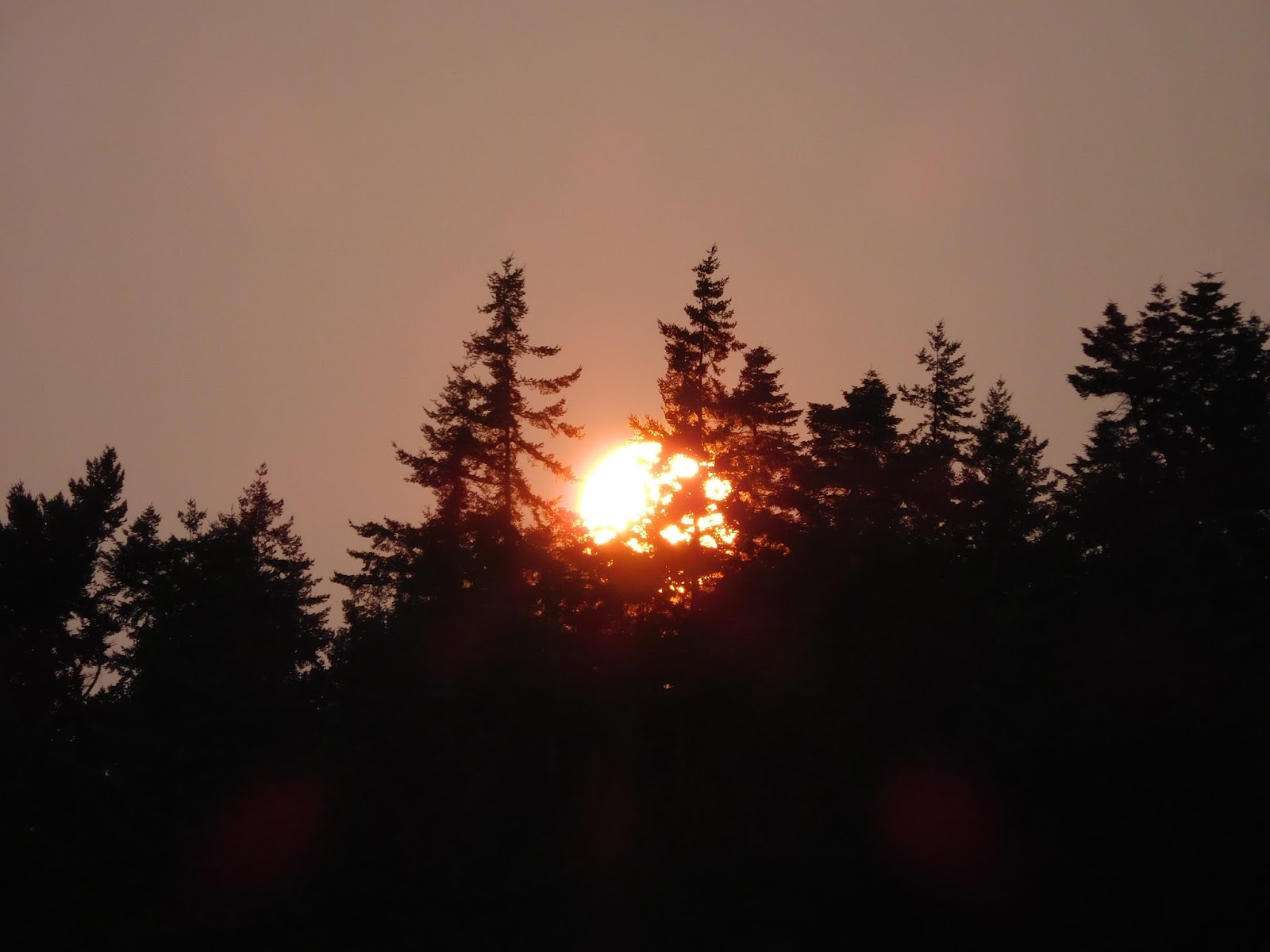
A lovely Sunset at Mud Bay
Neighboring Hunter Bay has consistent 15-foot depths over a mud bottom and is protected from all but northeast winds.  We saw several boats anchored in Hunter, while finding ourselves anchored alone in Mud Bay.  The numerous mooring buoys in both bays and throughout Lopez Sound belong to area residents.  Although homes are plentiful in Lopez Sound, most are tucked among the hills behind trees providing a sense of privacy.  Crabbing and clamming appears to be a popular local past-time. 

Morning Fog greets us in Mud Bay
A blanket of fog greeted us in the morning and didn’t burn off until 11am.  A haze due to the forest fires in Canada still lingered in the air.  Undeterred, we continued to our next stop at Blakely Island Marina.  Approaching the fuel dock and the marina docks is best accomplished at slack water.  
Combination Day-use Moorage and 24-hour Fuel Dock at Blakely Island
It can be a challenge approaching the outside dock or heading down the narrow channel into the marina when the current is running.  However, fresh made donuts, delicious ice cream, and other goodies found at the store are worth the effort. 
Lovely Grounds and Outdoor Seating at Blakely Island Marina
The grounds are lovely and the views are striking on a clear day.  Those interested in flying always appreciate watching small planes depart and arrive at the adjacent community airstrip. 
Sweets and Other Treats at Blakely Island Store & Marina
After our sweet indulgence at the Blakely Island Store & Marina, we made our way to Obstruction Pass State Park on the southeast tip of Orcas Island.  We confirmed that the three mooring buoys at the park are still in place and available for boats 45 feet and under for overnight moorage, fees are paid ashore.  Families appeared to be having a great time playing on the beach and cooling off in the water; campers had pitched their tents and were seen hiking along the trails. 
Obstruction Pass State Park
It turned out to be a lovely day despite the dull-colored sky.  We continued our journey along Orcas Island and turned north into East Sound, reaching the village of Eastsound where we anchored for the night in Fishing Bay.   

Friday, July 28, 2017

And the Helm Goes Round and Round


Oak Bay Marina, Vancouver Island
We were up early to cross the ‘big pond’ from Canadian waters to U.S. waters.  The seas were flat calm as we departed Oak Bay Marina near Victoria, sunlight reflected off the waves and sparkled like diamonds.  
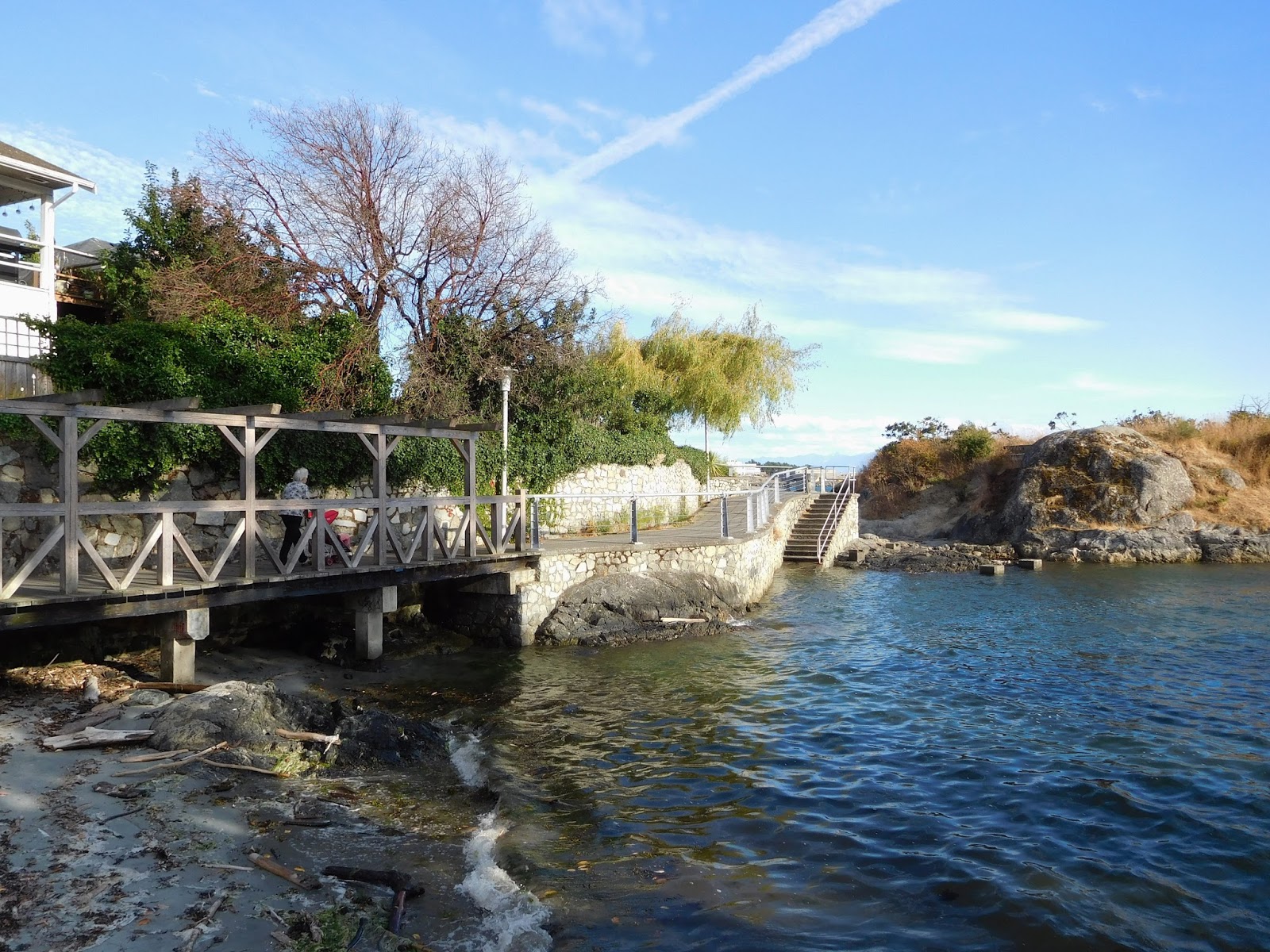
Walkway and lovely Vistas along Oak Bay Marina
The radio was busy with chatter as boaters headed out for their summer cruise.  For us, it was time to head home to Anacortes to begin work on edits for the 2018 Waggoner Guide.  
Fog Bank along Guemes Channel
A fog bank hugged the hills as we approached Anacortes.  
A Busy Day at Cap Sante Marina
Boats were departing and arriving through the narrow entrance into Cap Sante Marina.  There to greet us was a seal sunning himself on the pier at our slip.  Not wanting to be disturbed, he finally slid into the water as I tossed down the line.  He soon made himself comfortable on the neighboring pier and continued sunning himself.  Mr. Heron showed up to welcome us as well and keep his seal friend company.  We too were looking forward to the company of friends and beginning work on Waggoner Guide chapters covered during our three months of cruising. 
Having started our position as managing editors late in the 2016 season, this summer was our first opportunity to fully explore and gather updates for the next edition of the Waggoner Guide.  Like many followers and readers of the Guide, it’s always surprising how much can change from year to year.  We are happy to report that we have gathered numerous updates, including changes for chartlets. 
Work begins in August on finishing the last chapters of the Waggoner Guide and then we are off boating again to collect updates for the front chapters, including San Juan Islands, Strait of Juan de Fuca, Hood Canal and Puget Sound (watch for more blog posts to come).  Then back to the office to work on edits once again and prepare a print-ready version in time for the Seattle Boat Show and marine shops and book stores followed by seminars and classes.  Soon spring has arrived and it starts all over again, like a wheel that goes round and round.  It’s a labor of love by the Waggoner Team to create a substantial contribution for the boating public.  We appreciate all the kind words and love shown for the Waggoner Guide, we constantly hear encouraging words from boaters who tell us the guide is an invaluable resource of information and convenient planning tool.

Thursday, July 27, 2017

Ruins from the 1800’s at Esquimalt


Fisgard Lighthouse at the entrance to Esquimalt Harbour (gun emplacement on left)
 
After departing Victoria Harbour, we circled around Duntz Head in 20 knot winds to make our way back north into nearby Esquimalt Harbour.  The Royal Canadian Navy has a base here and pleasure craft need to contact ‘Queens Harbour Master Operations’ on VHF Channel 10 when entering and exiting the harbour between Fisgard Lighthouse and Duntze Head – give the name of your boat, size and make of boat, and direction of travel outbound or inbound.  When entering, indicate your destination, such as “anchoring off Cole Island.”  
Royal Canadian Navy Base in Esquimalt Harbour
As we approached Duntze Head, we contacted QHMO announcing our arrival and intentions while snapping photos of the historic Fisgard Lighthouse, the first lighthouse on Canada’s West Coast.  Fisgard light was built and opened during the year 1860 and was automated in 1929.  The lighthouse is still in operation and houses a small museum.  In 1862, the Royal Navy’s Pacific Squadron established themselves in Esquimalt, eventually building storehouses and workshops ashore.  
Cole Island, Historic Munitions Site
Dinghy Dock at Cole Island in Esquimalt Harbour
Coastal defense became important and increased with the gold rush era and tensions between the U.S. and the British over boundary disputes begun by the ‘San Juan’s Pig War’ of 1859.  Five batteries of guns were constructed around Victoria, including an 8-inch gun at the mouth of Esquimalt Harbour near the lighthouse.  
Old Marine Guard House
The British and Canadian Navies stored munitions on Cole Island inside Esquimalt Harbour between 1860 and 1938.  Visitors can anchor off the island and arrive by dinghy at the BC Parks dinghy dock to explore the island and the fascinating ruins of the powder magazine buildings and quarters for 
Marine Guard House Living Quarters 
the Marine Guard. 
The harbour is well protected (no pun intended) with good holding on a mud bottom.  It’s an interesting side-trip from Victoria which is often overlooked.  
Munitions Storage, Cole Island
Locked Munitions Storage, Cole Island
After spending the afternoon in Esquimalt Harbour, we continued our journey heading around the south end of the Saanich Peninsula past Victoria, then eastward to Oak Bay.  We managed to maneuver the boat into our assigned narrow slip at Oak Bay Marina in 20 knot winds unscathed.


Munitions Storage
You can take your dinghy inside during high tides
Munitions Storage seen along the east shore of Cole Island

Wednesday, July 26, 2017

The Scenic Side


Westsong/Songhees Walkway
Songhees Walkway meanders around the harbour
Time to work off some of those calories from eating-out and indulging in tasty treats at the Empress, so we got out the bicycles to explore the Vic West district of Victoria.  Riding north along Wharf Street, we turned west, crossing Johnson Bridge over the Upper Harbour and arrived in Vic West.  Following the south shoreline in Vic West is the beautiful Westsong Walkway, also referred to as Songhees Walkway.  We were very impressed with this beautiful oceanfront paved trail that meanders along the shore around rock outcroppings and over foot bridges past lovely homes, condominiums, and hotels tucked off the main tourist track.  
Beautiful Vistas from the Songhees Walkway
Bikes are not permitted on the Westsong Walkway since the pathway is narrow with blind corners and designed to be a peaceful experience.  The walk is easy with no hills to climb and the views are fabulous.  Three water-taxi landings are located along the Westsong/Songhees Walkway, with departures from downtown Victoria’s waterfront, so getting there by bicycle isn’t necessary.  We walked for a couple of miles but it didn’t seem that long with so many surprises and vistas along the way.  The walkway is a true delight that shouldn’t be missed.  Tucked in one of the coves along Songhees Walkway is the site of a new world-class marina nearing completion and is intended for yachts over 65 feet.  
Docks for the future Victoria International Marina (downtown Victoria across the harbour)
The new Victoria International Marina will provide exclusive services for captain and crew as well as special events and a dining venue open to the public.  Gaining a new appreciation for the city of Victoria, we rode our bicycles along Esquimalt Road and across Johnson Bridge, arriving back at our boat, ready to depart the following morning for Esquimalt Harbour. 

Tuesday, July 25, 2017

Vibrant Victoria


Goldstream Boathouse Marina at the head of Finlayson Arm
After departing Brentwood Bay, we paid a visit to Goldstream Boathouse at the end of Finlayson Arm in Saanich Inlet.  We had an enjoyable visit with Alida Seymonsbergen of Dutch descent and owner of the marina.  She was happy to share their plans for future marina improvements.  She also had some interesting bear stories to share, including a big black bear that wondered around their boatyard earlier that day.  After a pleasant visit we headed back north, rounding Saanich peninsula and anchored for the night in Roberts Bay just north of Sidney.  Roberts Bay offers good holding in a flat mud bottom.  The only drawback are a few large wakes from passing boats that make their way into the anchorage, but the bay becomes settled in the evening as boat traffic subsides.  
Anchorage, Buoys, and Sandy Beaches along Sidney Spit
The following morning we made a stop at Sidney Spit to check on the park buoys, buoy regulations, and water depths.  We found the area to be quite shallow with extensive eel grass; however, there is still suitable anchorage and buoys appropriate for moderate size boats; smaller boats and dinghies can make use of the park dock.  
Attractive Gonzales Lighthouse
From Sidney Spit we continued south down Haro Strait in calm seas.  Passing the attractive Gonzales Lighthouse, we rounded the point and soon entered Victoria Harbour, active with pleasure craft, commercial vessels, little water taxis and seaplanes.  
Entering Victoria Harbour
Since seaplanes land and take-off in the narrow entrance to the harbour, boats must follow a marked lane along the shore, keeping a row of yellow spar buoys (like the yellow line down the center of a road) to port when entering and departing the harbour.  
Yellow Spar Buoys mark the boat lane into Victoria Harbour
Moorage space was available
in front of the Empress Hotel and Parliament Building within easy walking distance of other downtown attractions.  
China Town district in Victoria
Mixing pleasure with work, we toured Olde Town, China Town, and enjoyed dinners out in the vibrant city of Victoria.  While looking for the Thrifty Foods grocery a few blocks south on Menzies Street, we found a nice lunch venue nearby.  
The Bent Mast Cafe
‘The Bent Mast’ café, serving light tasty dishes, is in one of many historic homes found throughout Victoria.  Construction on the house began in 1884, one year before the ‘last spike’ of the Trans Canada Railroad was driven in.  The house is located in the James Bay district, but was then called the Beckley Farm area, land that was used by the Hudson’s Bay Company to grow vegetables.  
The old Hudson's Bay Company Building
The old Hudson’s Bay Company building still stands at the corner of Menzies and Simcoe Street adjacent to ‘The Bent Mast’ café.  Rumor has it that the house (café) was a brothel in later years, what with it being relatively close to the docks.  Drugs were also a problem of the time, the Port of Victoria became one of North America’s largest importers of opium from Hong Kong.  The opium trade was legal and unregulated until 1865 and not banned until 1908.  The Hudson’s Bay Company was established by British agent James Douglas and his entourage who arrived in 1842 to set up a trading post.  It was feared that Fort Vancouver would fall into American hands due to the Oregon territory boundary dispute.  
Olde Town District in Victoria
Fort Victoria was built in 1843 in the area known today as Olde Town in the heart of Victoria’s downtown.  Miners later made their way to the region in the late 1800’s when gold was discovered.  Victoria was a convenient seaport and major outfitting center for the mainland goldfields.  Through the late 1800’s and early 1900’s, Victoria became the busiest seaport north of San Francisco.  Vancouver Island joined British Columbia and together became the sixth province of the Dominion of Canada in 1871, with Victoria named as the capital.  
The beautiful Parliament Building
The beautiful Parliament Building was constructed between 1893 and 1897 and the impressive Empress Hotel was constructed in 1908 by the Canadian Pacific Railway.  Other grand buildings include Craigdarroch Castle built by Robert Dunsmuir, owner of coal mines and a railway on Vancouver Island; his son James Dunsmuir built his own grand residence at Hatley Park in present day Colwood in Esquimalt Harbour.  And then there’s the cute Emily Carr House & Garden on Government Street.  
The Impressive Fairmont Empress Hotel, Victoria
With much to see and do within greater Victoria, it’s hard not to have a great time.  With the winds picking up and more Waggoner work to be done, we decided to stay another night at the Victoria Harbour Authority Docks, a good excuse to have ‘Tea at the Empress.’       

Saturday, July 22, 2017

Cruising Saanich Inlet


Deep Cove Chalet and Restaurant
Saanich Inlet has several upscale marinas, dining venues, and hidden gems for boaters to enjoy; one could spend over a week just in the Saanich area enjoying these unique destinations.  After a delightful time at Mill Bay Marina on the west side of Saanich Inlet, we motored northeast across the Inlet to Deep Cove and anchored in front of the Deep Cove Chalet, a fine dining venue and a local’s best kept secret.  
Dining among the gardens at Deep Cove Chalet
The home, a historic chalet, was built as a teahouse for the B.C. Electric Rail Line in 1913 and has been a restaurant ever since.  You can anchor your dinghy just off shore in front of the chalet and walk up the path to have lunch or dinner (open Wed-Sun).  Look for the atrium-style windows on the second floor.  
Historic Elegant Dining at Deep Cove Chalet
Reservations are required and don’t forget to bring a nice pair of shoes to change into after leaving your boots on shore at the landing pad above the rocks; this is a high-class French restaurant with elegant table settings and a menu to match.  Anchorage for the mother ship is located south of the old pilings near the chalet with good holding on a flat mud bottom.  Exposed to westerlies, the anchorage is best in settled weather.  
Beautiful Bentwood Bay Resort & Marina
Next stop in Saanich Inlet to the south is Brentwood Bay and the beautiful Brentwood Bay Resort & Marina.  The Resort offers accommodations, a spa, swimming pool, and a fine dining venue with a classy pub.  Views from the dining room and patio are splendid, overlooking the marina and Saanich Inlet.  Less formal cafés in the area include the Seahorse Café located next door serving lunch and breakfast items.  
Swimming Pool overlooking Brentwood Bay Marina
The popular Blue’s Bayou, offering Cajun style dishes, is located to the south next to the Brentwood Community Dock (suitable for dinghies and small craft).  Nearby Butchart Gardens and beautiful Tod Inlet enhance the attraction of Saanich Inlet, drawing more boaters to the area.  It’s a short dinghy ride to Butchart Cove where you can tie at the dinghy dock and pay admission to enter the gardens at this backdoor location.  
Dinghy Dock in Butchart Cove
Butchart Cove also has four mooring buoys for boats 40 feet and under and one mooring buoy for 18 foot vessels and under – maximum stay is 24 hours.  
A stroll around Butchart Gardens is a special treat
Butchart Gardens, one of the highlights of Brentwood Bay, was once the site of a limestone quarry which supplied the nearby Portland Cement Plant, both properties were owned by Robert and Jennie Butchart.  The limestone deposit was exhausted in 1908.  
Lovely Butchart Gardens
Jennie envisioned turning the quarry into beautiful gardens.  Her plans were underway by 1912 and the Sunken Garden was  completed in 1921, more gardens were added in subsequent years.  Ian Ross, grandson of Mr. and Mrs. Butchart, created a spectacular fountain with the assistance of his plumber and electrician.  
Old Quarry now a beautiful garden
The fountain was installed in 1964 at a smaller quarry site on the property, commemorating the 60th Anniversary of Butchart Gardens.  Butchart Gardens continues to be an explosion of color with various species of flowers, shrubs, and magnificent trees covering 55 acres on the 130 acre estate.  
Many lovely spots at Butchart Gardens
The property is still family owned and has been designated a National Historic Site of Canada.  Boaters wishing to visit the Gardens also have the option of anchoring in beautiful Tod Inlet just around the corner from Butchart Cove.  
Pretty Tod Inlet
Tod Inlet has ample space for numerous boats to anchor, part of the Inlet is narrow requiring a stern-tie.  It’s a short scenic dinghy ride to Butchart Cove or you can dinghy to the dock on the southeastern shore of Tod Inlet to access a trail that leads to the front gate of Butchart Gardens (take the left turn at the Y in the trail, it's a 10 minute walk).   
Dinghy Dock in Tod Inlet
Bird Houses in Tod Inlet for Ecology Studies
This dinghy dock is provided by the Marine Conservation Society and BC Parks.  Look for the sandy beach next to the green Marine Ecology float and the bird houses atop several pilings.  Tod Inlet on the backside or west side of Butchart Gardens was the site of the Portland Cement Plant, a few ruins are found in the area. 
The dinghy dock in Tod Inlet also serves as an access point for the Gowlland Tod Provincial Park, a worthwhile destination in and of itself for hikers. The Gowlland Tod Provincial Park has an extensive trail system leading south through the forest and the Gowlland Range, connecting to Goldstream Provincial Park miles away near the south end of Finlayson Arm.  Some of these trails permit bicycles and horses.  There’s much to see and do in the Saanich area of Vancouver Island, it's worth taking time to enjoy all that this area has to offer.